Australian electricity bill glossary
Electricity bill terms explained
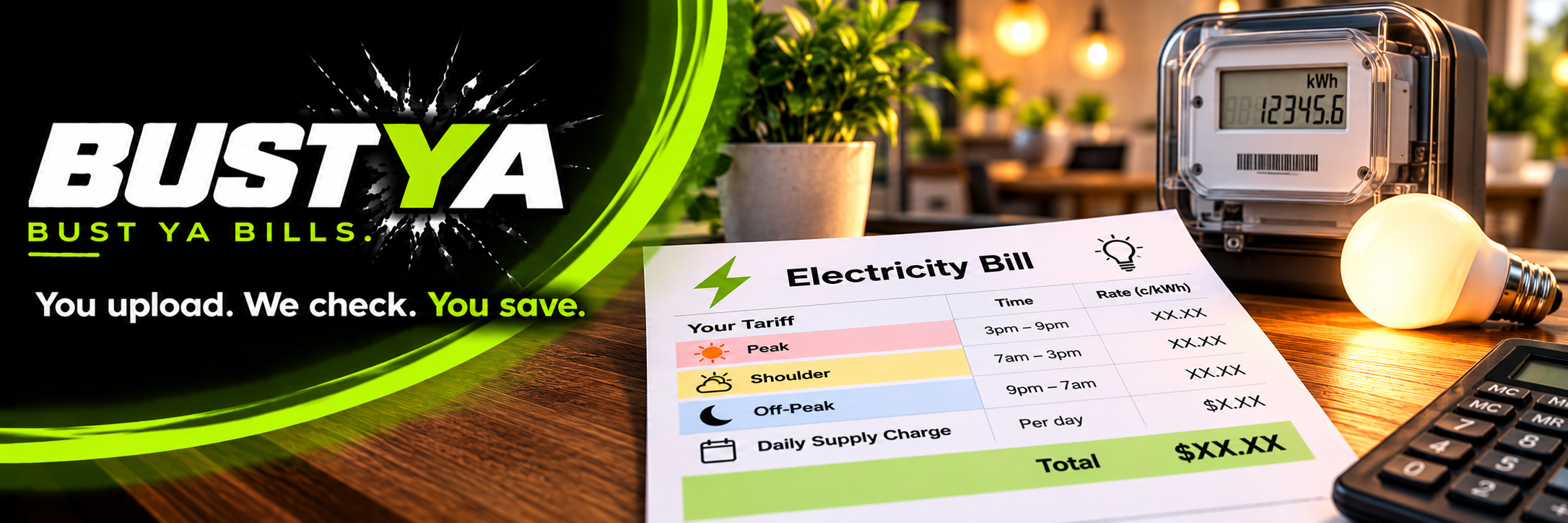
Electricity bills can use a lot of industry terminology. This guide explains common terms in plain English so you can better understand what you are being charged for.
Billing period
The start and end dates covered by the bill. Check the number of billing days before comparing one bill with another.
kWh (kilowatt-hour)
The unit commonly used to measure electricity consumption. Your bill may show total kWh used during the billing period.
Usage charge
The amount charged for electricity consumed. Depending on your tariff, different usage rates may apply at different times or to different loads.
Daily supply charge
A fixed charge generally applied for each day the property is connected to the electricity network, separate from how much electricity you use.
Average daily usage
Electricity consumption averaged across the billing period. It can be useful when comparing bills with different numbers of billing days.
Actual meter read
A reading based on meter data rather than an estimate. The exact wording used on bills varies between providers.
Estimated meter read
A meter reading that has been estimated rather than based on an actual reading for that point in time. An estimate can affect how usage appears on a particular bill.
Tariff
The pricing structure applied to your electricity. Examples can include single-rate and time-of-use arrangements.
Single-rate tariff
A tariff where the same usage rate generally applies regardless of the time electricity is consumed, subject to the details of the plan.
Time-of-use tariff
A tariff that can apply different usage rates at different times, commonly described using periods such as peak, shoulder and off-peak.
Controlled load
A separately metered or controlled electricity load, often used for equipment such as electric hot-water systems. It may have its own usage rate.
Solar export
Electricity generated by a solar system and exported to the grid. This is different from solar electricity used directly at the property.
Feed-in tariff or solar credit
The rate or credit applied to eligible electricity exported to the grid. The amount and conditions depend on the applicable arrangement.
Amount due
The amount the bill says is payable by the due date. It may differ from individual electricity charge subtotals where credits, adjustments or account balances are involved.
Learn more about your electricity bill
Want BUSTYA to read the actual bill?
Upload your first supported electricity bill for free and BUSTYA will turn the bill information into a clearer report.
Upload my first bill free